

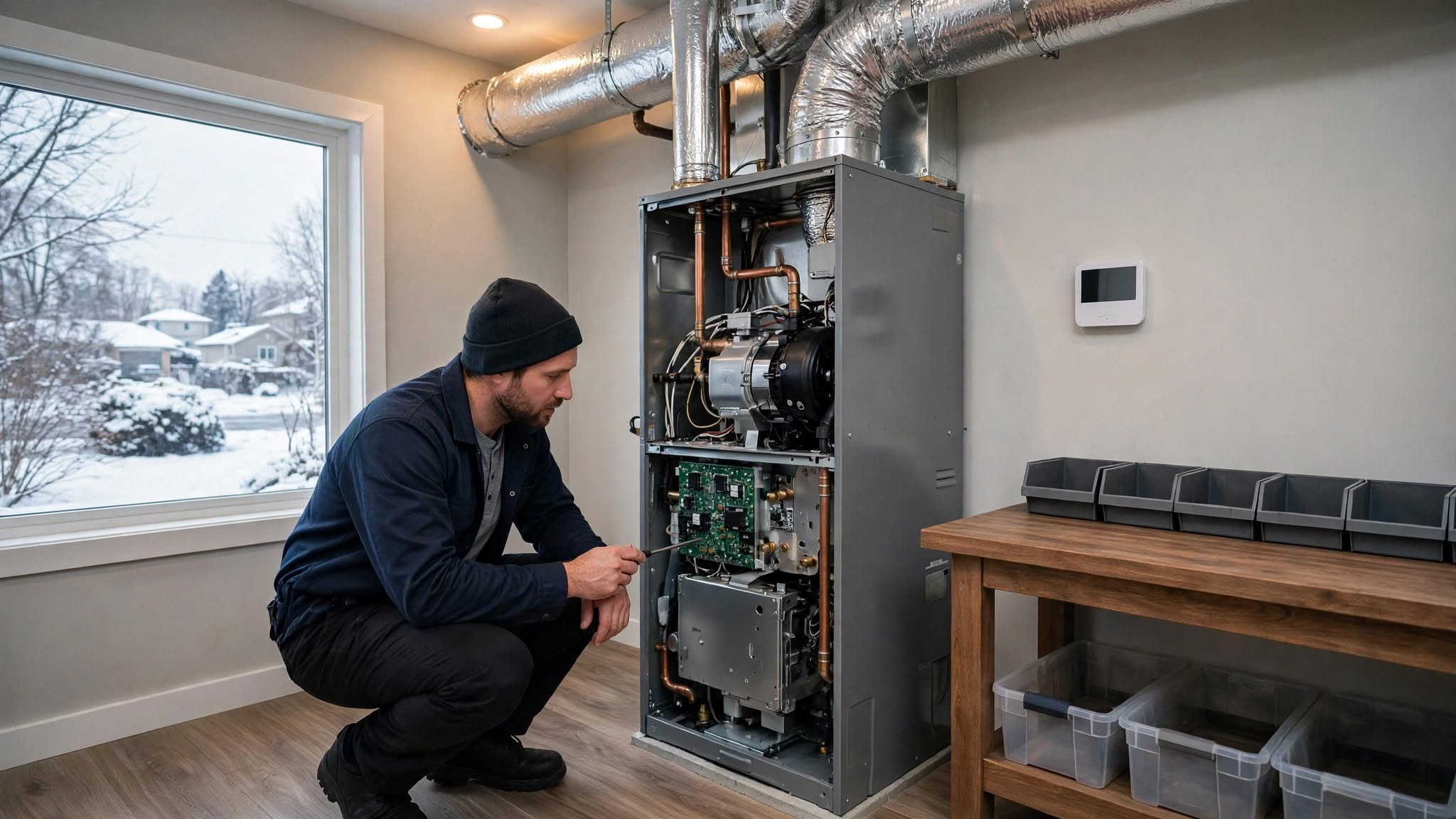
An HVAC system keeps a home comfortable all year. It handles heating, cooling, and air movement. While people often talk about air conditioners or thermostats, the furnace does a large share of the heavy work in many homes. It is the part that produces heat when temperatures drop and keeps the indoor space warm and livable.
In colder months the furnace becomes the main player. It turns fuel or electricity into heat and then pushes that warm air through the ducts. Without a working furnace the rest of the system cannot deliver comfort when it is needed most. That is why many technicians call it the workhorse of the whole setup.
How a Furnace Fits into the Full System
An HVAC system has several main pieces. The furnace creates heat. The air conditioner removes heat in summer. Rudy from Legendary Air Cooling & Heating in Hemet, CA explains, “The blower motor is the workhorse of your HVAC system and moves air through the ducts.” The thermostat tells everything when to turn on or off. Filters clean the air as it moves.
The furnace sits at the center of the heating side. In a forced-air system it burns natural gas, propane, or uses electric elements to warm the air. A heat exchanger keeps the combustion gases separate from the air that enters the living spaces. The blower then sends the heated air out through the supply ducts and pulls cooler air back through the return ducts. This cycle continues until the thermostat reaches the set temperature.
Many modern systems combine the furnace with an air conditioner that shares the same ducts and blower. In those setups the furnace still carries the heating load while the outdoor unit handles cooling. The furnace cabinet often houses the blower and filter, so it stays involved even when the system switches to cooling mode.
Why the Furnace Carries So Much Responsibility
Heating a home takes more energy than cooling in many climates. The furnace has to raise the indoor temperature against cold outdoor air, sometimes for long stretches of the winter. That constant demand makes it work harder and longer than other parts of the system.
A reliable furnace also protects the home from freezing pipes and other cold-weather problems. When it runs properly it keeps humidity and air quality more stable. Homes with older or poorly maintained furnaces often feel drafty, uneven, or dusty because the unit cannot move and condition air as it should.
The efficiency of the furnace affects the whole system. A high-efficiency model can extract more heat from the same amount of fuel and send less waste out the flue. That lowers energy bills and reduces strain on other components. When the furnace runs well the blower and ducts also perform better because the air is moving at the right temperature and volume.
Signs the Furnace Needs Attention
Homeowners can watch for a few clear signals. Uneven temperatures from room to room often point to a problem with the furnace or its airflow. Strange noises such as banging, squealing, or rattling suggest loose parts or a failing motor. Higher energy bills without a change in weather can mean the unit is working harder than it should.
A yellow burner flame instead of a steady blue one can signal a combustion issue that needs prompt checking. Frequent short cycles, where the furnace turns on and off quickly, also show that something is not right. Dust or soot around the unit or a strong smell when it first starts are other reasons to call for service.
Regular Maintenance Keeps the Workhorse Running
Changing the filter every one to three months is one of the simplest and most important steps. A clogged filter forces the blower to work harder and can cause the furnace to overheat. Annual professional tune-ups catch small problems before they grow. Technicians clean the burners, check the heat exchanger, test safety controls, and measure airflow.
Keeping supply and return vents open and clear helps the system move air freely. Sealing leaky ducts also improves performance because heated air stays inside the living spaces instead of escaping into attics or crawl spaces.
Choosing and Caring for a Furnace
When a furnace reaches the end of its useful life, usually after fifteen to twenty years, replacement becomes the practical choice. Newer models offer better efficiency and quieter operation. Matching the size of the new furnace to the home is important. A unit that is too large short-cycles and wastes energy. One that is too small runs constantly and still fails to keep up.
A well-maintained furnace supports the rest of the HVAC system. It delivers steady heat, works with the cooling side when needed, and helps keep energy use reasonable. Treating it as the workhorse it is means paying attention to filters, yearly service, and early warning signs. That approach keeps the whole home more comfortable through every season.

